
Categories
Uncategorized

5 Signs It’s Time to Upgrade Your Security System

Introduction

Technology evolves quickly—and so do the threats to your home or business. If your security system hasn’t been evaluated or upgraded in years, you might be relying on outdated security systems that are no longer effective.

In this article, we’ll explore the top 5 warning signs it’s time to upgrade your security system, highlight how ignoring these signs can put you at risk, and explain how modern surveillance and smart security features can transform your protection strategy.


1. False Alarms Are Increasing

If your alarm system frequently goes off for no reason, it might be more than just a nuisance—it’s a red flag indicating serious alarm system issues.

  • Old sensors can trigger without real threats
  • Outdated wiring is more prone to malfunction
  • Improper calibration can cause faulty signals

Why it matters: Frequent false alarms reduce trust in your system and can cause law enforcement to respond slower over time. Upgrading to a smart security system with advanced motion detection and AI-driven alerts can drastically reduce these issues and provide more reliable protection.


2. You’re Missing Remote Access and Real-Time Monitoring

One of the most significant features of a modern surveillance setup is the ability to manage your system remotely. If your current setup doesn’t allow you to:

  • View camera feeds remotely
  • Arm/disarm alarms from your phone
  • Get real-time push notifications

…you’re missing a key component of today’s business security solutions.

Upgrade tip: Consider cloud-connected surveillance, mobile-access control, and smart locks. These tools allow faster response times, flexible management, and round-the-clock awareness—even when you’re away.


3. Cameras Are Outdated or Low-Resolution

Are your security cameras showing their age?

  • Using analog wiring instead of IP networks?
  • Producing grainy or black-and-white footage?
  • Lacking night vision or motion detection?

If yes, then you’re overdue for a security camera replacement.

Why it’s risky: In the event of a break-in, low-resolution footage might not help identify suspects or hold up in court. Today’s HD and 4K camera systems come with:

  • Infrared and color night vision
  • Cloud recording and playback
  • Motion-triggered smart alerts

Invictus Security offers expert evaluations to help clients transition away from outdated security systems and upgrade cost-effectively.


4. There’s Been a Security Breach or Break-In

If you’ve had a security incident, your current setup has already failed. A security upgrade should be a top priority.

  • Was the break-in captured clearly?
  • Did your alarms alert authorities in time?
  • Were any vulnerabilities left exposed?

Post-incident upgrades include:

  • Enhanced access controls
  • Live-monitored surveillance systems
  • Smart perimeter detection
  • Better response protocols through mobile alerts

Don’t wait for a repeat. Let Invictus help fortify your property with an upgraded, integrated solution.


5. Your System Is More Than 5–7 Years Old

If your security system was installed more than a few years ago, it may no longer meet today’s technological or compliance standards.

Older systems often:

  • Lack integration with smart home/business devices
  • Miss manufacturer support or security patches
  • Have limited compatibility with new sensors or platforms

These are clear signs you need to upgrade your security system before criminals exploit its weaknesses.

Upgrade path: We provide custom business security solutions for Florida clients looking to modernize—without having to start from scratch.


Bonus Tip: Integrate Human & Tech for Maximum Protection

Even the best smart security system can’t replace the physical presence of trained professionals. By combining human intelligence with modern tech, you get a comprehensive security upgrade that covers both physical and digital threats.

Ask about:


Why Choose Invictus for Your Upgrade?

At Invictus Security, we offer:

  • Free audits of your current setup to identify outdated components
  • Personalized security upgrade roadmaps
  • Integration with your existing systems to reduce costs
  • Installation, configuration, and staff training
  • Ongoing support and future-proof scalability

We don’t just upgrade your system—we future-proof your entire property.


Conclusion

If you recognize any of these signs, it’s time to upgrade your security system before it’s too late. Whether it’s outdated cameras, missed alerts, or lack of remote access, Invictus Security delivers the expertise, tools, and support to protect what matters most.

Get in touch today to schedule a system audit and explore how our modern surveillance solutions can give you the peace of mind you deserve.
Categories
Uncategorized

The Benefits of Hiring a Mobile Patrol Service for Your Property

Introduction

When it comes to protecting your property, traditional on-site security guards aren’t your only option. A mobile patrol service offers a cost-effective, highly visible, and flexible alternative to static security. Whether you manage a large residential complex, oversee a construction site, or operate a retail business with multiple entry points, mobile security can provide comprehensive coverage without the high cost of 24/7 on-foot personnel.

At Invictus Security, our fleet of licensed mobile patrol units is ready to protect properties across Florida with speed, professionalism, and customized patrol plans.


What Is a Mobile Patrol Service?

A mobile patrol service involves trained security guards conducting scheduled or random patrols of your property using a marked security vehicle. Unlike fixed-position guards, these patrols cover a broader area in less time, making them ideal for:

  • Large or multi-site properties
  • Parking lots and garages
  • Office complexes
  • Retail strips
  • Gated communities
  • Construction zones

Core Functions of Mobile Patrol Security

  1. Randomized Route Patrols
    Helps deter predictable patterns criminals rely on.
  2. Alarm Response
    Mobile units respond quickly to triggered alarms, verify breaches, and secure the scene.
  3. Lock-Up & Unlock Services
    Securing gates, doors, and access points at scheduled times.
  4. Lighting & Perimeter Checks
    Inspect outdoor lighting, fencing, windows, and landscaping for vulnerabilities.
  5. Trespasser Removal
    Engage with loiterers, unauthorized visitors, or suspicious vehicles.
  6. Report Writing & Incident Logging
    Document activity, issue citations, and report incidents to clients and authorities.

Why Choose Mobile Patrol Over Static Guards?

FeatureMobile Patrol ServiceStatic Security Guard
Area CoverageWide (multiple zones)Limited to fixed location
Visibility & DeterrenceHigh (marked vehicle presence)Moderate
Cost EfficiencyMore affordable for large sitesHigher (especially 24/7)
Response TimeFaster for multiple sitesLimited to on-site response
Scheduling FlexibilityDay/night shift variationTypically fixed shifts

Advantages of Mobile Patrol Services

🚗 High Visibility = Strong Deterrent

Marked security vehicles with flashing lights and uniformed guards make criminals think twice.

⏰ Rapid Incident Response

Mobile patrols can cover more ground quickly and be the first to respond to alarms, disturbances, or suspicious activity.

💼 Cost-Effective Coverage

Ideal for businesses that can’t afford 24/7 static security but need regular patrol presence.

📊 Customizable Patrol Schedules

Clients choose patrol frequency, timing, and high-risk areas that need more attention.

🏠 Versatility

Mobile patrol services adapt to all environments: construction, HOA, retail, or office settings.

📄 Incident Documentation

Every patrol includes logs and reports, ensuring transparency and accountability.


Case Study Examples

1. Residential Neighborhood in Orlando
A gated community experienced nighttime car break-ins. Invictus deployed mobile patrols between 10 PM and 5 AM, reducing incidents by 80% within two months.

2. Retail Strip in Tampa Bay
A strip mall with frequent loitering complaints saw improvements after introducing randomized mobile patrols every two hours during peak evening hours.

3. Construction Site in Fort Lauderdale
Mobile guards monitored equipment, locked gates nightly, and prevented copper wire theft through fast alarm responses.


Who Should Hire a Mobile Patrol Service?

Mobile patrol security is ideal for:

  • Property managers of residential or commercial zones
  • Owners of construction or renovation sites
  • Event organizers with off-hours asset protection needs
  • Warehouses with multiple access points
  • Shopping plazas and parking structures

What to Expect from Invictus Mobile Patrol Units

  • Marked, GPS-tracked vehicles
  • Highly trained guards with Class D licenses
  • Custom patrol routes designed per client needs
  • Digital reporting with photos and timestamps
  • Emergency dispatch coordination

Our clients also receive detailed activity logs to support audits, insurance claims, or internal policy reviews.


Conclusion

When safety, speed, and coverage matter, mobile patrol services offer unbeatable value. They act as both a strong deterrent and a rapid response team, adaptable to your property’s unique layout and security concerns.

Invictus Security provides licensed, professional mobile patrols tailored to protect what matters most to you.

Want to schedule a patrol assessment? Contact our team today for a free consultation and custom quote.

Categories
Uncategorized

Armed vs Unarmed Security: Which One Do You Need?

Introduction

One of the most common questions clients ask is: “Do I need an armed or unarmed security guard?” The answer depends on many factors—including your property’s risk level, the nature of your business, your location, and even your budget.

Choosing the right type of security guard is critical to ensuring the safety of your staff, customers, and assets. In this article, we break down the key differences between armed vs unarmed security, when to choose each, and how Invictus Security can help you make the right decision for your specific needs.


What Is an Unarmed Security Guard?

Unarmed security guards perform many of the same functions as their armed counterparts, minus the use of firearms. They often rely on:

  • Visual presence to deter crime
  • Communication skills for conflict resolution
  • Non-lethal tools like pepper spray, batons, or handcuffs (depending on regulations)
  • Surveillance, reporting, and access control

Best for:

  • Office buildings
  • Schools and libraries
  • Retail stores
  • Residential complexes
  • Hotels and resorts

Unarmed guards are ideal when the risk of violence is low and customer interaction is high. Their role often blends safety with service.


What Is an Armed Security Guard?

Armed security guards carry firearms and are licensed to use them under strict regulations. Their duties include:

  • High-risk site protection
  • Escorting high-value assets or individuals
  • Responding to active threats
  • Managing volatile situations

Armed guards require additional training, including:

  • Firearms safety and certification
  • Legal use-of-force education
  • Psychological screening
  • Ongoing requalification

Best for:

  • Banks and financial institutions
  • Jewelry stores
  • VIP or executive protection
  • High-crime areas
  • Large public events

Key Differences at a Glance

FeatureArmed SecurityUnarmed Security
Carries FirearmsYesNo
Licensing RequiredClass G (in Florida)Class D (in Florida)
Use-of-Force ProtocolsAdvancedBasic
Risk ToleranceHigh-risk environmentsLow to medium-risk
Public PerceptionMay be intimidatingMore approachable
CostHigherMore affordable

Legal Considerations in Florida

If you’re based in Florida, understanding state regulations is essential:

Invictus Security ensures that all our personnel are fully compliant with Florida licensing requirements and updated certifications.


When Should You Choose Armed Security?

Consider hiring armed guards when:

  • Your site holds high-value assets (e.g., cash, electronics, pharmaceuticals)
  • You’re operating in a high-crime area
  • There’s a risk of physical confrontation or violence
  • Your insurance or regulatory standards require armed protection
  • You are planning VIP or celebrity events

When Is Unarmed Security the Better Choice?

Choose unarmed security if:

  • You prioritize customer service and hospitality
  • The area has low security risks
  • Your property is public-facing and you want a non-intimidating presence
  • You’re focused on access control, monitoring, and deterrence

What Are the Cost Differences?

Armed guards usually cost more due to:

  • Higher insurance liability
  • Advanced licensing and training
  • Additional certifications (CPR, firearms requalification)

However, this added cost comes with a higher level of protection where it’s needed most.

Unarmed guards are a budget-conscious solution for many businesses where the primary goal is to prevent minor incidents or manage foot traffic.


Case Studies: Armed vs. Unarmed in Action

Scenario A: Jewelry Store in Downtown Tampa
A high-end jeweler requested armed security after several nearby break-ins. Our licensed officers were stationed both inside and outside, helping deter crime and escort high-value clients after hours.

Scenario B: Luxury Condo in Miami
Unarmed guards were assigned to patrol the residential premises, check visitor IDs, monitor cameras, and assist residents. No firearm presence was needed, creating a calm, welcoming environment.

Scenario C: Outdoor Music Festival
A combination of both armed and unarmed security was used—armed personnel covered crowd perimeters and entrances, while unarmed guards handled customer service, bag checks, and navigation.


How to Choose What You Need: Questions to Ask

  1. What is the crime rate in your area?
    If your business or property is in a high-crime neighborhood, armed security might be more appropriate to ensure swift response and deterrence.
  2. Do you have valuable assets or sensitive information?
    Locations with expensive inventory, cash handling, or sensitive client information are better protected with armed personnel.
  3. Is the site open to the public or restricted?
    Public venues like malls or events may benefit from a visible unarmed presence to remain approachable. Restricted areas with limited access may require more assertive enforcement, potentially armed.
  4. What is your budget for security services?
    Armed guards come at a higher cost due to additional training and liability. If your risk level is moderate, unarmed guards offer a cost-effective alternative.
  5. Are you dealing with known threats or risks?
    If you’ve had threats, violent incidents, or specific security concerns, it’s wise to opt for armed protection trained to handle escalation.
  6. Do local laws allow armed guards on the premises?
    Some properties or industries (like schools or hospitals) may have restrictions. Always check your local regulations or work with a company like Invictus Security that ensures compliance.

Why Choose Invictus Security?

At Invictus Security, we offer:

  • Florida-licensed armed and unarmed guards
  • Customized risk assessments
  • 24/7 patrol and monitoring
  • Detailed incident reporting
  • Friendly, professional personnel trained to fit your brand image

Whether you’re running a resort, managing an apartment complex, or hosting a major event, we tailor our services to provide the exact level of protection you need.


Conclusion

The choice between armed vs unarmed security isn’t about which is better—it’s about which is right for your specific needs. Unarmed guards provide a calm, reassuring presence. Armed guards offer strength and deterrence in higher-risk situations.

Invictus Security is here to help you make the smartest, safest decision possible.

Ready to choose the right protection? Contact us today for a free security consultation and learn how we can customize a security solution for your site.

Categories
Uncategorized

What Does a Security Consultant Actually Do?

Introduction

Have you ever asked yourself, “Is my business really secure?”
It’s a question many business owners, property managers, and even church leaders overlook—until something goes wrong.

Security isn’t just about cameras or guards—it’s about having a professional plan. That’s where a security consultant comes in. But what do they really do?

In this post, we’ll explain who security consultants are, what services they provide, and how they can help you identify threats, reduce risks, and protect what matters most.


Table of Contents

  1. What Is a Security Consultant?
  2. Key Roles and Responsibilities
  3. Why Hire a Security Consultant?
  4. What Does a Security Assessment Involve?
  5. Common Industries That Use Security Consultants
  6. Benefits of Hiring a Consultant Over Going It Alone
  7. How to Choose the Right Security Consultant
  8. FAQ About Security Consulting
  9. Conclusion & Call to Action

What Is a Security Consultant?

A security consultant is a trained expert who evaluates your current safety measures and creates a customized plan to protect people, property, and data.

They work independently or with a security firm, offering services like:

  • Risk assessments
  • Security system evaluations
  • Emergency response planning
  • Policy and procedure reviews
  • Staff training

Rather than providing guards or hardware, they help you design a strategy that fits your needs—before you spend money on tools or personnel that may not even solve the problem.


Key Roles and Responsibilities

A good security consultant wears many hats depending on your needs. Here’s what they typically do:

🔍 1. Conduct Security Assessments

They inspect your property, operations, staff behavior, and existing security tools to find vulnerabilities.

📋 2. Develop Customized Security Plans

No cookie-cutter solutions here. Consultants create plans tailored to:

  • Building layout
  • Industry risks
  • Budget
  • Company culture

🛡️ 3. Design Physical and Cybersecurity Measures

This could include:

  • CCTV placement
  • Access control systems
  • Alarm integration
  • Cybersecurity protocols

👥 4. Train Staff or Volunteers

From front-desk workers to emergency response teams, your staff learns how to stay alert and handle situations properly.

📈 5. Help With Compliance & Insurance

Many industries require compliance with state or federal safety laws. Consultants ensure your security measures meet legal and insurance standards.


Why Hire a Security Consultant?

Here’s why smart businesses and organizations bring in a pro:

  • They save you money by helping you avoid buying unnecessary tech or hiring the wrong personnel.
  • They uncover hidden risks—things you and your team might overlook.
  • They give you peace of mind knowing your plan is solid and professionally designed.
  • They improve emergency readiness, reducing the risk of lawsuits, injuries, or financial loss.

💡 Did you know? Businesses with security assessments report up to 50% fewer incidents than those without one.


What Does a Security Assessment Involve?

A security assessment is like a physical exam for your building or operation. Here’s what typically happens:

🏢 Step 1: On-Site Visit

The consultant walks your property, checking doors, windows, parking areas, blind spots, entrances, exits, and lighting.

🎥 Step 2: Technology Audit

They review your existing security systems:

  • Are cameras positioned correctly?
  • Do alarms trigger properly?
  • Is access control secure?

🧠 Step 3: Threat & Risk Analysis

Using industry benchmarks and crime trends, they evaluate your likelihood of threats, from burglary to workplace violence or natural disasters.

🗂️ Step 4: Policy Review

They examine your current procedures:

  • Do staff know what to do in an emergency?
  • Are there gaps in how visitors are managed?

🛠️ Step 5: Final Report & Recommendations

You receive a detailed report with:

  • Identified vulnerabilities
  • Suggested improvements
  • Budget-conscious solutions
  • Implementation timeline

Common Industries That Use Security Consultants

Security consulting isn’t just for Fortune 500 companies. It’s essential for:

IndustryRisks They Face
Retail StoresTheft, shoplifting, break-ins
Churches & Religious BuildingsUnauthorized access, mass gatherings
Construction SitesVandalism, equipment theft
Office BuildingsUnauthorized entry, workplace violence
SchoolsStudent safety, emergency planning
Events & VenuesCrowd control, threat mitigation

Benefits of Hiring a Consultant Over Going It Alone

Let’s face it—anyone can install a camera. But that doesn’t mean it’s helping. Here’s why professional help matters:

Experience: Consultants understand crime patterns, response protocols, and system integration.
Objectivity: They spot weaknesses you may miss due to overfamiliarity.
Customization: Every plan fits your unique operation—not a generic checklist.
Liability Reduction: Lower your risk of lawsuits or regulatory penalties.
Insurance Savings: Many insurers offer discounts for having professional assessments done.


How to Choose the Right Security Consultant

Here’s a quick checklist when hiring:

  • ✔️ Proven experience in your industry
  • ✔️ Strong local knowledge (especially crime trends in your area)
  • ✔️ Licensed and insured
  • ✔️ Offers both physical and digital security planning
  • ✔️ Can provide references or case studies
  • ✔️ Doesn’t push unnecessary products or services

Pro Tip: Ask them how they’ve helped businesses similar to yours. Their answer will show you what they really bring to the table.


FAQ: Security Consulting

❓ What is the difference between a security consultant and a security guard?

A consultant designs the plan. A guard executes it. Consultants assess risks and create protocols—guards carry them out.

❓ How much does a security consultant cost?

It varies by project size. Some charge per hour, others offer fixed packages. Think of it as an investment in long-term safety.

❓ Do I need a security consultant if I already have cameras and alarms?

Yes! Most systems aren’t configured or used properly. A consultant ensures they actually work for you, not just look good.

❓ How often should I review my security plan?

At least once a year, or after any major change (new building, expansion, or incident).


Conclusion

Security isn’t just about reacting to threats—it’s about preventing them before they ever happen. And that’s exactly what a security consultant does.

From schools and churches to retail shops and office buildings, these professionals help you spot vulnerabilities, design smart systems, and protect your people and assets.

Don’t wait for something to go wrong before taking action.


Call to Action

👉 Ready to assess your risk and build a smart, affordable security plan?
Contact our expert security consulting team today for a no-obligation assessment — your safety is worth it.

Categories
Uncategorized

5 Signs Your Business Needs a Security Assessment

Security Consulting Services

🔍 Introduction: How Safe Is Your Business, Really?

Most businesses think they’re protected—until something goes wrong.

A camera at the door and locks on windows might seem like enough, but modern threats require more than surface-level solutions. From unauthorized access to untrained staff and outdated technology, security gaps often go unnoticed until it’s too late.

A security assessment can reveal vulnerabilities and give you a plan that actually works. If you’re unsure whether you need one, here are five clear signs your business is overdue for a professional security check-up.


📑 Table of Contents

  1. What Is a Security Assessment?
  2. Sign #1: A Recent Incident Exposed Weaknesses
  3. Sign #2: You’re Expanding, Renovating, or Relocating
  4. Sign #3: Your Technology or Policies Are Outdated
  5. Sign #4: Staff Wouldn’t Know How to Respond to a Crisis
  6. Sign #5: You’ve Never Had One Before
  7. What Happens During a Security Assessment?
  8. Final Thoughts + Call to Action

✅ What Is a Security Assessment?

A security assessment is a comprehensive review of your business’s physical, operational, and digital safety measures. It evaluates how well your current systems, procedures, and team behaviors prevent incidents like theft, vandalism, internal threats, or emergencies.

Security consultants look at:

  • Access control systems
  • Surveillance coverage
  • Visitor management protocols
  • Alarm effectiveness
  • Emergency response readiness
  • Employee training

The goal is simple: reduce risk, protect people, and create a proactive plan before problems happen.


🚨 Sign #1: A Recent Incident Exposed Weaknesses

Whether it was a burglary, equipment theft, workplace accident, or a false alarm that went unresolved, any security-related incident is a red flag.

These events often indicate that your current setup isn’t working as intended:

  • A door may have poor access restrictions
  • Your alarm may not have been properly monitored
  • Staff may not have known how to react
  • Your surveillance footage might not have covered the right angle

Even a close call—like someone sneaking into a restricted area or a power outage disabling your alarms—signals the need for a fresh set of professional eyes.

Businesses that conduct post-incident security reviews often discover multiple weak points they weren’t aware of. That’s why assessments are a critical first step in risk reduction.


🏗️ Sign #2: You’re Expanding, Renovating, or Relocating

Growth is great—but it also introduces new security challenges.

When you add staff, inventory, equipment, or even just more square footage, you expand the number of access points, blind spots, and potential vulnerabilities.

A security assessment during these transitions can:

  • Recommend updated CCTV positioning
  • Ensure that access control systems scale with your team
  • Adapt your emergency evacuation plans
  • Evaluate lighting, fencing, and entry/exit monitoring in new areas

You shouldn’t assume what worked at your old location or size will work now. Each new layout brings different risk factors that must be addressed proactively.


🧰 Sign #3: Your Technology or Policies Are Outdated

Security systems are not “set and forget” tools. They need to evolve with time.

If your setup includes:

  • Cameras older than five years
  • Outdated keypad locks or shared access codes
  • Staff that haven’t been trained on modern emergency protocols
  • A missing or outdated cybersecurity layer

…you’re leaving your business vulnerable to both external and internal threats.

A modern security assessment will identify where you’re falling behind:

  • Are your alarm systems still functional under power failure?
  • Does your video storage meet compliance needs?
  • Are your IT systems protected against digital intrusion?

If your technology and staff policies haven’t been updated in 2–3 years, you’re likely overdue for a full security overhaul.


🚪 Sign #4: Your Staff Wouldn’t Know What to Do in a Crisis

Security isn’t just about equipment—it’s about people.

Ask yourself:

  • Do employees know who to contact during an emergency?
  • Are there clearly posted procedures for fire, medical, or violent threats?
  • Have you ever conducted emergency drills?
  • Do staff know where to go and what to do during a lockdown or evacuation?

If the answer to any of these is “no” or “I’m not sure,” your security plan has a critical human gap.

A good security consultant will:

  • Provide staff awareness training
  • Build a clear, actionable crisis response plan
  • Run scenario-based drills to prepare your team
  • Assign roles and responsibilities during real-world threats

Human readiness is the final line of defense—and often the most important.


🕵️‍♂️ Sign #5: You’ve Never Had One Before

This is the most overlooked risk of all.

If your business has never had a formal, professional security evaluation, you’re likely operating with blind spots you don’t even know exist.

Even businesses in “low crime” areas can be exposed through:

  • Poor camera coverage
  • Weak visitor check-in policies
  • Unlocked entry points
  • Lack of secure data handling
  • No background checks or access level limits for staff

It doesn’t matter how safe things feelonly a trained consultant can assess your facility with industry benchmarks and real-world threat modeling.

Most businesses that undergo their first security assessment are surprised by how many improvements can be made without big budgets—often through simple reorganization or training.


🧠 What Happens During a Security Assessment?

When you hire a security consultant, here’s what typically happens:

1. Initial Interview

They’ll ask about your operations, team size, layout, industry, and prior incidents.

2. On-Site Walkthrough

They inspect your facility, including perimeter fencing, windows, doors, parking areas, and internal layout.

3. System Audit

They test your alarms, cameras, access controls, backup systems, and remote monitoring tools.

4. Policy & Procedure Review

Your existing safety manuals, visitor logs, staff training, and emergency plans are examined.

5. Customized Security Plan

You receive a tailored action plan that includes:

  • Short-term fixes
  • Long-term improvements
  • Budget-conscious technology upgrades
  • Staff training recommendations
  • Optional implementation support

This report becomes the foundation of your long-term security strategy—and shows due diligence to insurers and regulators.


✅ Final Thoughts

Security isn’t just a cost—it’s an investment in your peace of mind.

If your business has had a recent incident, is growing, uses outdated systems, has untrained staff, or has never had a security assessment before—you are at risk.

Fortunately, identifying those risks is the easy part. Fixing them becomes simple with the right guidance.


📞 Call to Action

Ready to secure your business before it’s too late?
👉 Contact our certified security consultants today for a personalized, budget-friendly security assessment.

We’ll help you find the gaps—before someone else does.

Categories
Uncategorized

5 Reasons to Hire a Security Consultant Before Upgrading Your Business Security

Hire a Security Consultant

🔍 Introduction

Planning to improve your business security?

Most businesses start by shopping for new cameras, alarms, or access control systems. But without expert guidance, this approach often leads to overspending, poor placement, or missing the real threats entirely.

Before investing in upgrades, the smartest move you can make is to bring in a security consultant.

In this post, we’ll explore five compelling reasons to hire a professional security consultant before making changes to your security setup—especially if you want real protection and real results.


📑 Table of Contents

  1. What Does a Security Consultant Actually Do?
  2. Reason #1: Consultants Identify the Real Risks
  3. Reason #2: They Help You Avoid Wasting Money
  4. Reason #3: They Design a Plan That Fits Your Business
  5. Reason #4: They Ensure Legal and Insurance Compliance
  6. Reason #5: They Provide Vendor-Neutral Advice
  7. Final Thoughts
  8. Call to Action

🧠 What Does a Security Consultant Actually Do?

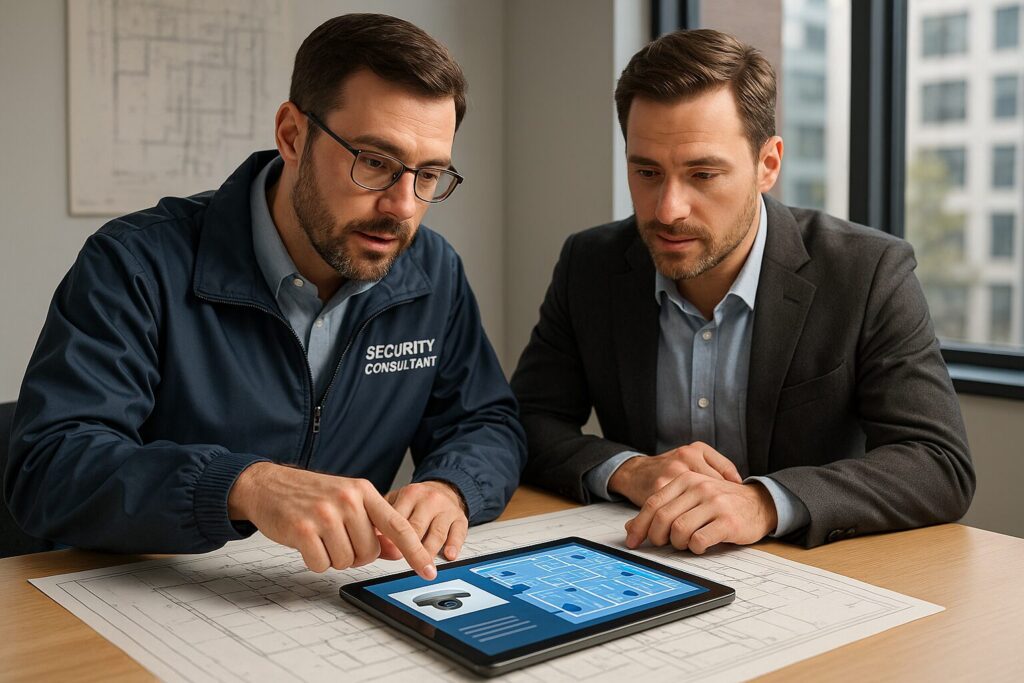
A security consultant is a trained expert who analyzes your property, procedures, and current technologies to uncover vulnerabilities and create a plan to protect people, assets, and operations.

Unlike a salesperson or technician, consultants don’t sell you products—they offer professional risk analysis and strategic planning. They assess:

  • Physical security: locks, gates, alarms, lighting
  • Surveillance systems: camera placement, blind spots, footage storage
  • Access control: keys, fobs, biometric entry, ID verification
  • Employee training and emergency readiness
  • Digital threats and cyber-physical system integration

Their role is to maximize your investment while minimizing blind spots.


⚠️ Reason #1: Consultants Identify the Real Risks

Most business owners assume they know their weak points. But assumptions can be dangerous.

A security consultant performs an objective, professional risk assessment—looking at crime patterns, operational routines, physical layout, and team behavior to spot risks you may not see.

security consultant

For example:

  • That back door your team uses daily? It might be vulnerable to tailgating.
  • The storage room next to reception? It’s likely under-monitored.
  • The cameras you installed two years ago? They’re possibly covering the wrong angles or aren’t recording effectively.

You can’t fix what you don’t know. And that’s why identifying all threats before upgrading anything is the most important step.

Embedded keywords: risk assessment, business security evaluation, blind spots, professional threat analysis


💸 Reason #2: They Help You Avoid Wasting Money

Security technology isn’t cheap. New surveillance systems, smart locks, access controls, alarms—it adds up fast.

Many business owners install:

  • High-resolution cameras that cover low-risk areas
  • Alarms with poor integration to law enforcement
  • Biometric locks where basic keypads would’ve sufficed
  • Multiple systems that don’t work together

A security consultant helps you prioritize your budget and recommends upgrades that will:

  • Actually reduce risk
  • Integrate with existing infrastructure
  • Save money over time through fewer incidents and better efficiency

You avoid buying things you don’t need—and more importantly, you get results.

Embedded keywords: avoid overspending, cost-effective security upgrades, ROI of security planning, reduce risk with expert advice


🧩 Reason #3: They Design a Plan That Fits Your Business

Security is not one-size-fits-all.

Retail stores, offices, warehouses, churches, and construction sites all have different needs. What works for one may fail for another.

A consultant creates a custom security strategy that considers:

  • Your building layout
  • Business hours and foot traffic
  • Types of valuables or sensitive data on site
  • Staffing routines and shift changes
  • External crime trends in your area

This plan includes:

  • Recommendations for physical and digital security upgrades
  • Emergency procedures tailored to your team
  • Training guides for staff
  • Upgrade schedules aligned with your business goals

Embedded keywords: custom security strategy, tailored safety plans, site-specific security assessment, security for different industries


🛡️ Reason #4: They Ensure Legal and Insurance Compliance

Did you know your business could be violating safety standards without even knowing it?

A consultant ensures that your new upgrades follow:

  • OSHA regulations for workplace safety
  • Fire code requirements for emergency exits and alarms
  • Insurance guidelines for coverage eligibility
  • Industry-specific compliance, such as HIPAA for healthcare or PCI DSS for payment processors

This matters because:

  • Insurance claims can be denied if security was found to be negligent
  • Regulatory fines can cost thousands of dollars
  • In lawsuits, a strong security assessment shows you took reasonable precautions

Upgrades without professional assessment can leave you exposed—even if you thought you were doing the right thing.

Embedded keywords: compliance audit, insurance liability protection, legal security standards, security regulation review


🧭 Reason #5: They Provide Vendor-Neutral Advice

If you ask a camera company what you need, they’ll sell you more cameras. Ask a lock company? You’ll need better locks.

Security consultants aren’t trying to sell hardware. Their job is to:

  • Evaluate products across multiple brands and technologies
  • Recommend what fits your environment—not their inventory
  • Integrate systems that work together
  • Help you choose reliable, vetted vendors if you don’t already have one

This objectivity leads to smarter long-term decisions, better system compatibility, and fewer headaches.

Embedded keywords: vendor-neutral consulting, objective security advice, technology integration, unbiased recommendations


🔚 Final Thoughts

Upgrading your security system might seem straightforward—but without a plan, you risk overspending, under-protecting, and missing compliance.

Bringing in a security consultant first ensures that:

  • You know your real risks
  • You spend where it matters
  • Your upgrades match your unique business needs
  • You stay compliant with laws and insurance policies
  • You get clear, honest advice—not a sales pitch

Whether you’re upgrading because of a recent incident, expansion, or future planning, a consultant is your most valuable investment.


📞 Call to Action

Ready to upgrade the smart way?
👉 Speak with one of our professional security consultants today for a no-obligation security assessment.

We’ll help you make informed, cost-effective decisions that actually protect your business.

Categories
Uncategorized

How to Become a Security Guard in Florida: A Comprehensive Guide to Getting Your FL Security License

How to Become a Security Guard in Florida

A Comprehensive Guide to Getting Your FL Security License

If you’re looking for a stable career or exploring opportunities in private security, becoming a licensed security guard in Florida is an excellent choice. This guide covers everything—from licensing requirements and training options to salary expectations and the application process—to help you launch your career in the Sunshine State.

Do You Need a License to Be a Security Officer in Florida?

Yes. Florida law requires you to have a Class D Security License to work as an unarmed security guard. For armed positions, you must also obtain a Class G Firearms License. These licenses ensure you meet state training requirements, pass background checks, and uphold professional standards.

How Much Can You Make as a Security Guard in Florida?

Salaries for security guards in Florida vary based on experience, location, and certifications:

  • Entry-Level Unarmed Guards: $15–$18 per hour
  • Armed Guards: $20–$30 per hour
  • Executive Protection/Specialized Roles: $30–$50 per hour

With the right training and experience, your earning potential can increase significantly in this competitive field.

How Long Does It Take to Become a Licensed Security Officer in Florida?

The entire process generally takes between 30 to 90 days, including:

  • 40 Hours of Training: Typically completed in about one week
  • Background Check and Application Processing
  • Fast-Track Option: Apply in person to receive a temporary license, allowing you to work immediately while your full application is reviewed

Steps to Become a Security Guard in Florida

  1. Meet Eligibility Requirements:
    • Be at least 18 years old
    • Be a U.S. citizen or legal resident alien
    • Hold a high school diploma or GED
    • Pass a Level 2 criminal background check
  2. Complete the Required Training:
    • Unarmed Guards (Class D License): 40 hours covering basic security procedures, emergency response, legal guidelines, and report writing
    • Armed Guards (Class G License): An additional 28 hours focused on firearm safety, handling, and Florida use-of-force laws
  3. Pass the Exam:
    Earn your training certificate by successfully passing the required exam.
  4. Submit Your Application:
    Complete and submit your application to the Florida Division of Licensing, including the necessary fees.
  5. Undergo a Criminal Background Check:
    A Level 2 screening will verify your eligibility.
  6. Receive Your License and Start Working:
    Once approved, you’re ready to begin your career as a licensed security guard in Florida.

Eligibility and Training Requirements

Eligibility Requirements:

  • Minimum age of 18
  • U.S. citizenship or legal resident alien status
  • High school diploma or GED
  • Clean criminal record with no felony convictions, violent misdemeanors, or pending charges
  • Successful completion of a Level 2 background check

Required Training:

  • Unarmed Security Guard Training (Class D):
    40 hours of classroom instruction covering security procedures, emergency response, legal guidelines, and report writing.
  • Armed Security Guard Training (Class G):
    An additional 28 hours focusing on firearm safety, handling, and understanding Florida’s use-of-force laws.
    Note: Individuals with law enforcement or military experience might qualify for training exemptions. Contact the Florida Division of Licensing to verify your eligibility.

Common Disqualifications

Certain factors may prevent you from obtaining a security guard license in Florida:

  • Criminal Record: Felony convictions, violent misdemeanors, or pending charges
  • Substance Abuse: History of drug or alcohol-related offenses
  • Mental Health Issues: Conditions that impair judgment or reliability
  • Military Discharge: Dishonorable discharge from the military
  • Falsified Information: Providing inaccurate details on your application
  • Incomplete Training: Not meeting the required training standards

How to Apply for Your Florida Class D Security Officer License

  1. Complete Your Training:
    Finish the 40-hour Class D course at a licensed security school.
  2. Prepare Your Application:
    Gather your training certificate, fingerprints, and the application fee (currently $45).
  3. Submit Your Application:
    Applications can be submitted online, by mail, or in person at a regional office.
  4. Temporary License (Optional):
    If you apply in person, you may receive a temporary license to start working immediately while awaiting full approval.
  5. Undergo the Background Check:
    Complete the required Level 2 screening.

Frequently Asked Questions (FAQ)

Q: Do I need a license to work as a security guard in Florida?
A: Yes. Unarmed guards require a Class D Security License, while armed positions also need a Class G Firearms License.

Q: What training is required?
A: Unarmed guards must complete 40 hours of training. For armed positions, an additional 28 hours of firearms training is required.

Q: How long does the licensing process take?
A: It typically takes between 30 to 90 days, including training, background checks, and application processing.

Q: Can I start working before my full application is approved?
A: Yes, if you apply in person, you can receive a temporary license to work while your full application is reviewed.

Start Your Security Career Today!

Becoming a licensed security guard in Florida is a straightforward process with the right guidance and training. With competitive salaries and numerous opportunities in private security, there’s never been a better time to start your journey. Don’t wait—get started now and secure your future in Florida’s thriving security industry!

Categories
Uncategorized

Hoa Security Assessment

Enhancing HOA Security: Strategies, Responsibilities, and Best Practices

Homeowners Associations (HOAs) play a vital role in safeguarding community assets and ensuring residents’ safety. An effective HOA security system not only protects property values and community reputation but also creates a secure, welcoming environment for everyone. In this post, we explore what HOA security entails, why it’s important, and how to develop a robust security strategy—including physical security measures, risk management plans, and community-based safety programs.

1. What Is HOA Security and Why Is It Important?

HOA security is the comprehensive system of policies, procedures, and physical measures designed to protect community assets. It involves mitigating threats that can damage the neighborhood’s goodwill, impacting real estate values and the overall reputation. Whether through advanced surveillance, integrated access control systems, or on-site security personnel, a strong community safety program builds trust and enhances quality of life.

2. The HOA’s Role in Community Security

HOAs have both moral and legal obligations to maintain a secure environment. The Board of Directors, together with property managers, are responsible for:

  • Developing Security Policies: Establishing clear rules and procedures that guide community safety and risk management.
  • Implementing Physical Security Measures: Overseeing the installation of perimeter fencing, secure gates, lighting, and state-of-the-art security cameras.
  • Risk Mitigation: Conducting regular security assessments to identify vulnerabilities and enforce countermeasures.
    Inadequate security measures can expose the HOA to legal liabilities and diminish property values. Engaging a certified residential security consultant is a proactive step in creating an effective security program.

3. Developing an Effective HOA Risk Management Plan

A sound HOA risk management plan begins with a detailed property security assessment to identify assets, potential threats, vulnerabilities, and the countermeasures needed. Key components include:

  • Security Policies & Procedures: Defining community rules and how they will be enforced.
  • Layered Physical Security: Utilizing secure perimeter walls, fences, automated gates, and adequate lighting.
  • Surveillance & Monitoring: Installing high-definition security cameras and engaging security personnel to monitor and respond to suspicious activities.
  • Regular Maintenance & Inspections: Routinely checking all physical security measures to ensure continued effectiveness.

4. Key Physical Security Measures

Access Control

  • Gate Security Systems: Automated gates, vehicle barrier arms, and trap systems with dual barriers deter unauthorized entry and prevent tailgating. These are critical elements of an integrated access control strategy.

Surveillance Systems

  • Security Cameras: Selection of the right cameras—such as thermal, smart analytic, or high-definition models—should be based on the camera’s intended application. A thorough security survey can guide the optimal placement of these HOA security cameras.
  • Data Retention Policies: It’s recommended that footage is recorded for at least 30 days and managed by a designated data custodian to support investigations if needed.

On-Site Security Personnel

  • Security Guards & Patrols: Depending on community size and traffic, employing security personnel for access control, regular patrols, or operating a gatehouse can significantly reduce risks. Patrol schedules (24/7 vs. spot checks) directly influence the overall security system budget.

5. Community Involvement and Safety Tips

Security is a shared responsibility. Engaging residents in community safety not only enhances vigilance but also builds a cohesive neighborhood:

  • Neighborhood Watch Programs: Encourage residents to know their neighbors, report suspicious activity, and actively participate in local safety initiatives.
  • Community Communication: Use newsletters, community meetings, or digital platforms to share HOA safety tips, such as maintaining clear sight lines by trimming vegetation, ensuring adequate exterior lighting, and securing homes and vehicles.

6. Jurisdiction and Limitations of Security Officers

Security officers contracted by the HOA are empowered to protect the community within defined boundaries. Their jurisdiction:

  • Is Limited to the Community: They do not have enforcement power on public property outside the community’s perimeter.
  • Focuses on Deterrence: Routine patrols and visible presence signal that the community is well-protected.
  • Requires Regular Inspections: Frequent checks of perimeter walls, fences, and other physical barriers help identify vulnerabilities and schedule maintenance as needed.

7. Choosing the Right Security Equipment

Investing in the correct security equipment requires careful planning:

  • Conduct a Security Survey: Determine which areas require coverage and select the specific types of cameras or sensors needed for effective monitoring.
  • Professional Guidance: A certified physical security consultant can design a tailored camera system that meets your community’s unique needs.
  • Technology Considerations: For example, thermal cameras and smart analytic systems can detect heat signatures or prolonged parking. Consider both wired and wireless (solar-powered with RF or cellular connectivity) solutions based on the installation environment.

8. HOA vs. Condominium Security Programs

While many principles of security are similar, condominiums—especially high-rise buildings—face unique challenges:

  • Access Control: Condos require robust electronic access measures for both pedestrian areas and parking structures.
  • Tailored Strategies: Condominium associations should employ security consultants to design systems that respect residents’ privacy while protecting common assets.
  • Oversight: Elected board members or security committees play a key role in overseeing security guard performance and ensuring that surveillance measures are appropriately implemented.

9. Frequently Asked Questions (FAQ)

Q: What is HOA security?
A: HOA security encompasses all measures—from policies and physical barriers to surveillance and on-site personnel—designed to protect community assets and ensure residents’ safety.

Q: Is the HOA responsible for community security?
A: Yes. The HOA, through its Board of Directors and property managers, holds both moral and legal responsibilities to establish and enforce security measures that protect the community.

Q: How does an HOA risk management plan work?
A: It begins with a comprehensive security assessment to identify vulnerabilities, followed by implementing tailored countermeasures such as physical barriers, surveillance systems, and regular maintenance.

Q: What are the key physical security measures for an HOA?
A: Effective measures include secure perimeter fencing, automated gate systems, adequate lighting, high-definition security cameras, and trained security personnel.

Q: How can residents contribute to community safety?
A: Residents can join neighborhood watch programs, maintain clear sight lines around their homes, report suspicious activity, and participate in community meetings to stay informed about security protocols.

Q: What should I consider when choosing security cameras for my HOA?
A: Consider the camera’s application, placement, technology (e.g., thermal, smart analytic), power source (wired or wireless), and ensure a professional security assessment is conducted for optimal coverage.

Conclusion

Effective HOA security is a multifaceted challenge that calls for a blend of policy, technology, and community involvement. By developing a thorough risk management plan, investing in layered physical security measures, and engaging residents through community safety programs, HOAs can safeguard property values and enhance overall neighborhood well-being. Whether managing a gated community or a high-rise condominium, a tailored security strategy is essential for creating a safe and thriving community.

Categories
Uncategorized

How to Become an Armed Security Guard (Training & Requirements)

How to Become an Armed Security Guard in Florida (Training & Requirements)

Are you seeking a career with high demand, competitive pay, and a sense of purpose? Becoming an armed security guard in Florida could perfectly fit you. Here’s everything you need to know about this exciting career path.

What is an Armed Security Guard?

An armed security guard is a licensed professional who protects people, property, and assets while carrying a firearm. Armed guards often work in high-security environments such as banks, government buildings, private estates, or for personal protection. This role requires specialized training, responsibility, and adherence to strict state regulations.

What are the Requirements to Become an Armed Security Guard in Florida?

To qualify as an armed security guard in Florida, you must meet the following criteria:

• Be at least 21 years old.
• Hold a valid Class D Security License (unarmed license).
• Complete a Class G Firearms Training Course (28 hours).
• Be a U.S. citizen or legal resident alien.
• Pass a Level 2 criminal background check.
• Possess a valid state-issued ID.
• Have no disqualifying criminal history or mental health issues.
• Demonstrate proficiency in firearm safety and handling.

What Disqualifies You From Being an Armed Security Guard?

Certain factors can prevent you from obtaining your armed security license, including:

• Felony convictions or crimes of moral turpitude.
• Violent misdemeanors, such as domestic violence or assault.
• Pending criminal charges.
• Drug-related offenses.
• Unrestored civil rights for those with past convictions.
• History of mental illness that may affect judgment or reliability.

How Much Do Armed Security Guards Make in Florida?

Armed security guards in Florida enjoy competitive pay, with salaries ranging between $20 and $30 per hour, depending on experience, location, and the type of security work.

  • Entry-level armed guards: Earn around $20–$22 per hour.
  • Experienced armed guards in high-security roles: Can earn $25–$30 per hour or more.
  • Executive protection officers or specialized roles: May command rates up to $40–$50 per hour.

How to Become an Armed Security Guard in Florida

Here’s a step-by-step guide to starting your career:

  1. Earn Your Class D Security License
  • Complete 40 hours of security guard training at a licensed security school.
  1. Enroll in the Class G Firearms Training Course
  • Complete 28 hours of instruction on firearm safety, handling, and Florida’s use-of-force laws.
  1. Submit Your Application
  • Apply for the Class G license through the Florida Division of Licensing, including your training certificate and background check results.
  1. Pass the Background Check
  • A Level 2 criminal background check will be conducted to ensure you meet state requirements.
  1. Obtain Your Class G License

Armed Security Guard Process by State

While the steps above outline the process in Florida, requirements can vary by state. Check the licensing requirements specific to your state if you plan to work elsewhere.

Take the First Step Toward a Rewarding Career

Becoming an armed security guard in Florida is more than just a job—it’s a career that provides stability, growth, and the chance to make a difference. With our expert training and support, you’ll be equipped to succeed in this dynamic industry.
Don’t wait—start your journey today!

Categories
Uncategorized

How to Become a Security Guard in Texas

How to Become a Security Guard in Texas

Your Complete Guide to Starting a Career in Texas Security

Do You Need a License to Be a Texas Security Guard?

Yes, in Texas, you must have a valid security license to work as a security guard. This is issued by the Texas Department of Public Safety’s Private Security Program and ensures you meet the state’s professional and legal requirements.

What Qualifications Are Needed to Be a Security Guard in Texas?

To qualify as a security guard, you must:

  • Be at least 18 years old.
  • Be a U.S. citizen or legal resident.
  • Have a high school diploma or GED.
  • Pass a criminal background check.
  • Complete the required training for your license level.

Levels of Texas Security Guards ?

Level II: Non-Commissioned Security Guard (Unarmed)

  • Entry-level position for unarmed guards.
  • Requires completion of the Level II training course (basic security procedures).

Level III: Commissioned Security Guard (Armed)

  • Authorized to carry a firearm.
  • Requires completion of the Level III training course, which includes firearm safety and use-of-force training.

Level IV: Personal Protection Officer (PPO)

  • Trained to provide executive or personal protection.
  • Requires completion of the Level IV training course, focusing on advanced protection tactics and client safety.

How to Get a Security Guard License in Texas.  

1. Find a Job as a Security Guard

    • Many employers require you to have a job offer before applying for a license.
    1. Complete the Required Training
    • Level II (Unarmed): Basic security procedures.
    • Level III (Armed): Firearm safety and laws.
    • Level IV (PPO): Advanced protective techniques.
    1. Get Fingerprinted
    • Schedule a fingerprinting appointment through the Texas Fingerprint Service Code Form provided by your employer or training school.
    1. Submit Your Application
    • Apply online through the Texas Department of Public Safety’s Private Security Program portal.
    • Include your training certificate, fingerprints, and application fee.

How Long Does it Take to Become a Licensed Security Guard in Texas?

The process typically takes 2–4 weeks, depending on how quickly you complete your training and submit your application. Background checks and application reviews can impact this timeline.

How Much Can You Make as a Security Guard in Texas?

Non-Commissioned (Unarmed) Security Guard Salary

  • Average pay: $15–$18 per hour.
  • Typically works in retail, residential, or entry-level roles.

Commissioned (Armed) Security Guard Salary

  • Average pay: $20–$25 per hour.
  • Higher demand in high-risk or specialized settings, such as government or corporate security.

Personal Protection Officer (PPO) Salary

  • Average pay: $30–$50 per hour.
  • Typically works in executive or celebrity protection, requiring advanced skills and experience.

What Disqualifies You From Becoming a Texas Security Guard?

Certain factors may prevent you from obtaining a security guard license in Texas:

  1. Felony Convictions
  • A history of felonies or violent crimes is grounds for disqualification.
  1. Drug Use or Substance Abuse
  • Drug-related offenses or substance abuse issues can disqualify applicants.
  1. False Information
  • Providing incorrect or fraudulent details on your application is cause for rejection.
  1. Mental Health Concerns
  • Conditions that impair your ability to perform your duties may be disqualifying.
  1. Previous Revocation or Suspension
  • If your security license has been revoked or suspended in the past, you may not qualify for a new license.

Start Your Security Career Today!

The process to become a security guard in Texas is straightforward with the right guidance. By following these steps, you can join a growing industry and begin a rewarding career in private security. Don’t wait—start your journey today!

Invictus Security Consulting, Executive Protection & Training Services